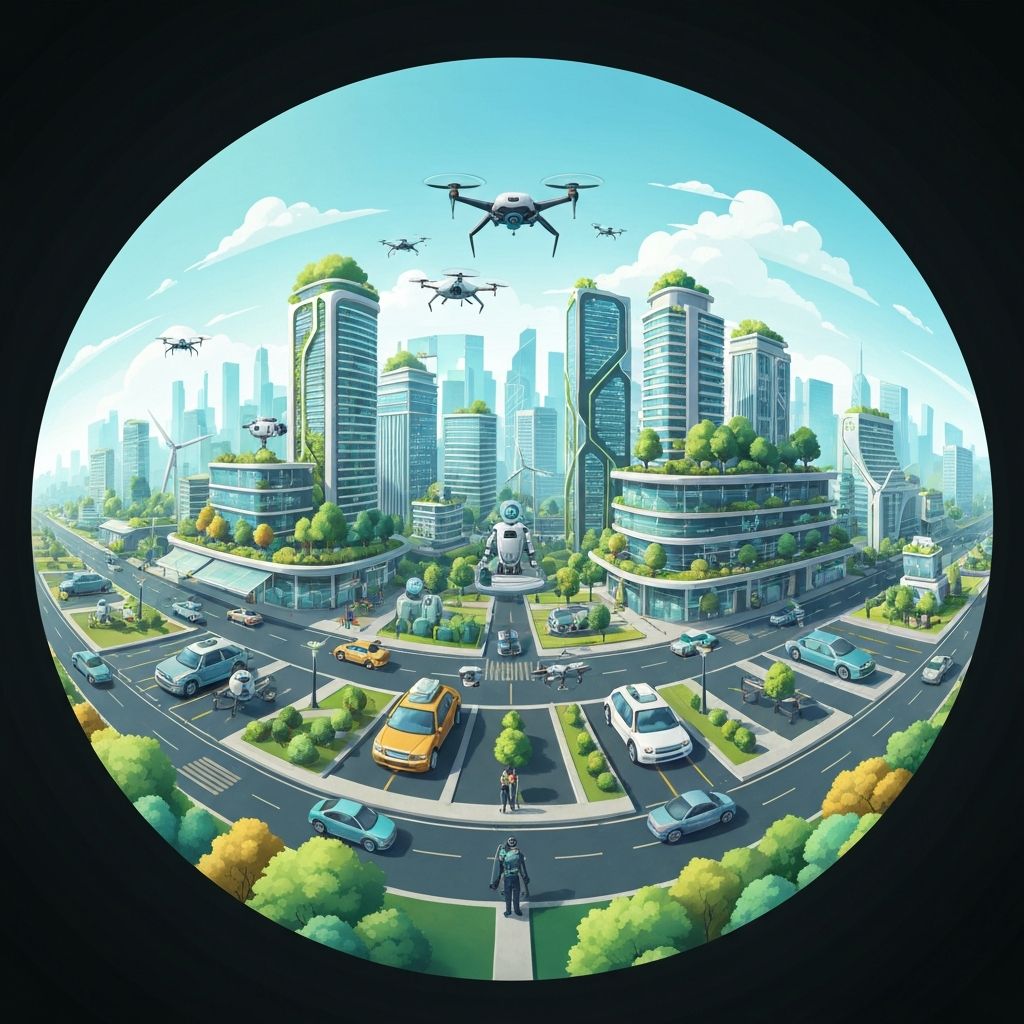
The Silicon Valley AI Regulation Dilemma: Innovation vs. Accountability
In the heart of Silicon Valley, where venture capital flows like water and startups are born and die in the span of a single funding round, a quiet battle is being waged over the future of artificial intelligence.
The Silicon Valley AI Regulation Dilemma: Innovation vs. Accountability
In the heart of Silicon Valley, where venture capital flows like water and startups are born and die in the span of a single funding round, a quiet battle is being waged over the future of artificial intelligence. The question isn't whether AI will transform society—that ship has sailed. The question is who will control it, and at what cost.
The Promise and the Peril
Walk through any tech campus in Palo Alto or Mountain View, and you'll hear the same refrain: "AI will solve everything." Climate change? AI will optimize energy grids. Healthcare? AI will diagnose diseases faster than any doctor. Education? AI will personalize learning for every student.
But behind the glossy presentations and TED Talk optimism lies a more complicated reality. The same companies promising to save humanity are also building systems that could fundamentally reshape power structures, eliminate jobs, and concentrate unprecedented control in the hands of a few tech giants.
The Regulatory Vacuum
California, home to the world's most powerful AI companies, has been slow to regulate the industry. While Europe has moved forward with the AI Act and China has implemented strict controls, California lawmakers have largely deferred to the tech industry's self-regulation promises.
This isn't an accident. Tech companies have spent millions lobbying against AI regulation, arguing that any constraints will stifle innovation and give competitors in other countries an advantage. But as AI systems become more powerful and more integrated into daily life, the cost of inaction grows.
The Concentration of Power
The AI industry is dominated by a handful of companies: Google, Microsoft, Meta, Amazon, and a few well-funded startups. These companies control not just the technology, but the data, the computing infrastructure, and the talent pipeline.
When OpenAI released ChatGPT, it sparked a global conversation about AI. But OpenAI itself is backed by Microsoft, which has invested billions. Google's DeepMind has been developing AI for years. Meta is building its own AI infrastructure. These aren't independent actors—they're extensions of the world's most valuable corporations.
The Labor Question
In San Francisco's Mission District, tech workers gather at coffee shops to discuss the latest AI developments. Many are excited about the possibilities. But there's also anxiety. Will AI replace their jobs? Will it make their skills obsolete?
The answer, increasingly, seems to be yes—at least for some roles. AI can already write code, create designs, analyze data, and handle customer service. As these systems improve, they'll replace more and more human workers.
The tech industry's response has been to promise retraining and new opportunities. But for workers who've spent years developing specialized skills, that's cold comfort. And for workers outside the tech industry—in manufacturing, retail, transportation—the disruption could be even more severe.
The Privacy Paradox
AI systems require vast amounts of data to function. Every interaction, every search, every purchase feeds into the machine learning models that power these systems. This creates a fundamental tension: the more we use AI, the more data we give to the companies that control it.
California has strong privacy laws, but they're being tested by AI. How do you protect privacy when AI systems need data to learn? How do you ensure consent when the ways data is used evolve faster than regulations can keep up?
The Race to the Bottom
There's a competitive dynamic at play that makes regulation difficult. If California imposes strict AI regulations, companies might move to states with looser rules. If the United States regulates too heavily, companies might relocate to other countries.
This creates a race to the bottom, where jurisdictions compete to offer the most permissive regulatory environment. But the costs of this race—in terms of privacy, labor displacement, and concentration of power—are borne by society as a whole.
The Path Forward
Some lawmakers are trying to chart a different course. Proposals for AI safety commissions, transparency requirements, and worker protection measures are circulating in Sacramento. But they face an uphill battle against well-funded industry opposition.
The challenge is finding the right balance: allowing innovation to flourish while protecting the public interest. It's not an easy task, and there are no simple answers.
What's clear is that the decisions made in the next few years will shape the future of AI—and by extension, the future of society. The question is whether those decisions will be made by a handful of tech executives in boardrooms, or by elected representatives accountable to the public.
In Silicon Valley, where the future is being built every day, that question has never been more urgent.
Full Report Available
Download the complete PDF report for detailed analysis, data, and additional resources.
Download Full PDF Report